
I can't say enough about the beauty and serenity that can be found at
Buenos Aires National Wildlife Refuge near
Sasabe Arizona. We headed out to the Grasslands Fair at
BANWR early on Saturday so we could do a little bird watching and get in some exercise at the same time.
.jpg)
It was a gorgeous day in the 60's with bright sunshine.
BANWR is home to quite a few endangered species including the Masked Bobwhite Quail which we were able to see in the enclosure located near the visitor center. They were quite shy and stayed under cover while we were there so I wasn't able to get the pictures that I had hoped to get but it was nice seeing them and knowing that because of the Refuge that these highly endangered birds have a fair chance of survival.
.jpg)
There is a grasslands restoration project underway at the refuge in an effort to increase Masked Bobwhite Quail habitat. Most of the trees and shrubs that you see are invasive species that developed due to the use of this place to graze cattle for many, many years.

One of the reasons I like this place so much is it's remote location. It's more than 50 miles south of Tucson down rt. 286 which has more hawks than houses. It is a place where you can travel the ten mile loop called Pronghorn Drive making frequent stops and be able to stand and not hear any human activity just the birds and the wind. Amazing!


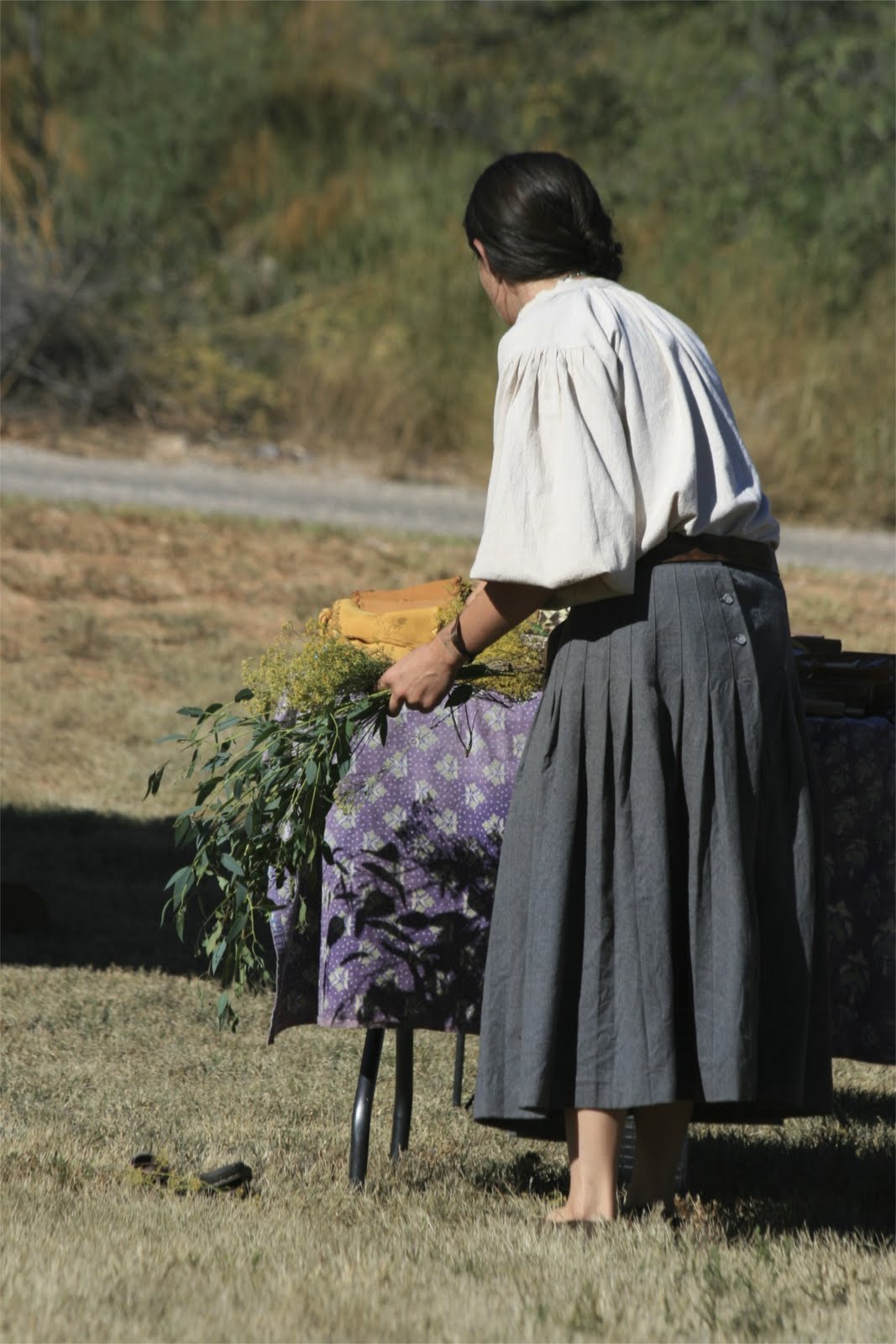
A young mother prepares her herbs for sale prior to the fair kicking off around 10:30 A.M. There were quite a few food vendors and many exhibits pertaining to the ALTAR VALLEY and conservation issues in general.

We started our walk past the enclosure that has the endangered
Chiricahua Leopard Frog and I was fortunate to catch this one sun bathing. One of the most serious threats to native frogs is the invasion of bull frogs which feed on other smaller frogs. We came across a wet area on our walk that had mesh fencing completely around it and later found out it was an attempt to keep it free of bull frogs as they travel across land to find food and water.


These Cassin's Sparrow photo's are my favorites from the day. There were many sparrows everywhere we went including many White Crowned.

.jpg)

As always we see many hawks and falcons when we travel to
BANWR including this Cooper's Hawk. Pole sitters all along the way let us know that the annual influx of
buteos and
acipitors has begun and we should see many of these birds in the coming months. On this trip we saw Northern Harrier, Red Tailed Hawk, Gray Hawk, Cooper's Hawk, Turkey Vulture and some that went unidentified.

.jpg)
The weather here has stayed very warm and I was surprised to see two fauns this late in the season but here is the proof! We saw a total of six mule deer in our travels around the refuge which is always a treat. I really have a hard time understanding why anyone would want to shoot these magnificent creatures.
.jpg)
 Baboquivari
 dominates the skyline here at
BANWR and our hikes into Brown Canyon with Richard Conway are some of my best memories here at
Buenos Aries.

.jpg)
People came and went and everyone seemed to enjoy the day even though the clouds set in and blocked out the sun for a good part of the day.
.jpg)
The music was excellent and the visitor center had some amazing exhibits. I really enjoyed the snakes and the raptors.

Apparently I wasn't the only one hoping to get that great shot!

Richard and Sara are the backbone of the Friends of
Buenos Aries National Wildlife Refuge an organization that would be happy to have you as a member. More information about Friends can be found at: /
www.friendsofbanwr.org/
Educating the next generation to love the land and respect the creatures that inhabit these special places will ensure
Buenos Aries will survive for years to come.

Mariachi
Plata entertained us while we enjoyed our food and checked out some of the exhibits.


A
Harris's Hawk has become an education bird because of it's inability to fly from a young age. Info on
Harris's Hawks:
www.allaboutbirds.org/guide/Harriss_Hawk/id
We didn't see any Pronghorn today but we did see a bevy of Quail fly up on our walk but identifying them was impossible as they came up out of the grass and flew rapidly away from us before going down in the tall grass never to be seen again. They could have been Gambel's or Montazuma's or they could have been Masked Bobwhite's. I'll have to try harder next time!


Hiding in the grass was this
Hyles Lineata.
en.wikipedia.org/wiki/Hyles_lineata


More Mule Deer.

.jpg)


These man made teepees are for Masked Bobwhite Quail habitat and can be seen on the road into the refuge. More information on Masked Bobwhite's can be found at:
www.seazrocks.net/seazrocks.net/Bobwhite_Program.html

 We began our trip to Mt Lemmon with the idea that we would do a little bird watching and get some foliage pictures for this blog. As it turned out there was very little bird activity and the foliage was past peak and allot of the leaves had already been shed due to a couple of days of strong winds here in the Tucson area.
 That being the case it was a beautiful day in the upper 80's at the base of the mountain where it is classic Sonoran Desert and in the upper 50's at the top of the mountain where mixed conifer forest and high elevation riparian areas are prevalent.
 On the way to the top of the mountain you pass through oak woodlands and ponderosa pine forest as well. The 25 mile journey is biologically comparable to the traveling from Mexico to the Canadian border.
 Not only is the change in vegetation remarkable but the views are incredible. Everywhere you look there is an amazing vista or an incredible peak.

 While the foliage was on the weak side it was still quite enjoyable for this former New England boy to be among deciduous trees with a splash of color.
 Most of the color that was still around was on the Quaking Aspens which in full color are very impressive trees.
.jpg)

 At the top of the mountain above 10,000 feet above sea level is the Steward Observatory and the Mt. Lemmon Sky Center that offers unique experiences in astronomy and nature. SkyCenter.arizona.edu I have purchased two tickets to the Total Lunar Eclipse and Winter Solstice Event at the Sky Center on December 21st 2010 as a Christmas present to myself and Nancy.


.jpg)
.jpg)
.jpg)

.jpg)

.jpg)
.jpg)
.jpg)

.jpg)
.jpg)




.jpg)


.jpg)
.jpg)


.jpg)
.jpg)


.jpg)

